Be yourself; Everyone else is already taken.
— Oscar Wilde.
This is the first post on my new blog. I’m just getting this new blog going, so stay tuned for more. Subscribe below to get notified when I post new updates.
Be yourself; Everyone else is already taken.
— Oscar Wilde.
This is the first post on my new blog. I’m just getting this new blog going, so stay tuned for more. Subscribe below to get notified when I post new updates.
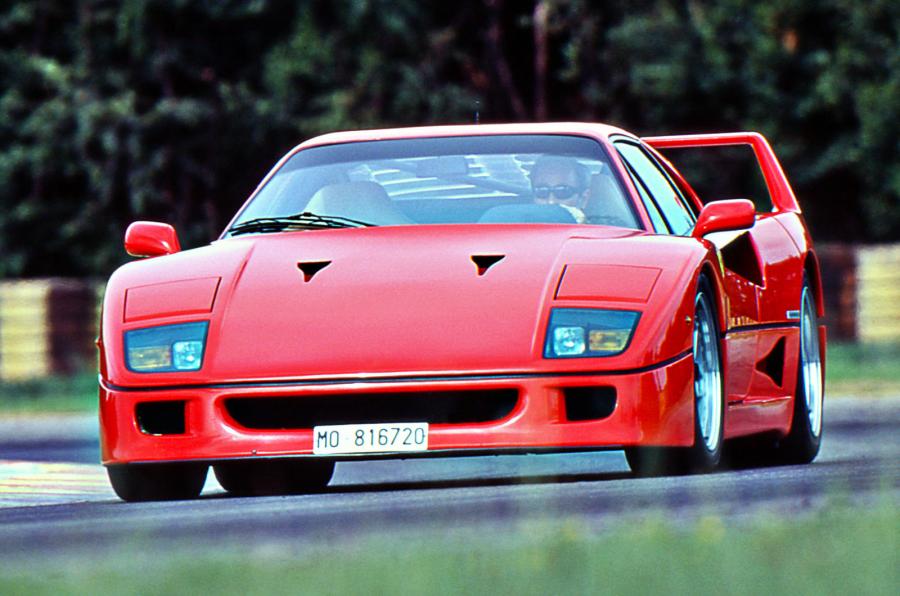
In 1929, Enzo Ferrari left Alfa Romeo’s employment to start his own racing stable (scuderia in Italian). Scuderia Ferrari did not race cars with the Ferrari name, though the Alfas they used on the track did sport the prancing horse. Race cars came to the scuderia from Alfa for tuning for almost a decade, and the Ferrari shop in Modena built its first car, the Alfa Romeo 158 Grand Prix racer, in 1937.
When Enzo Ferrari left Alfa Romeo, he agreed to not use his name in connection with racing for four years. That wasn’t so bad; WWII curtailed racing for most of those four years anyway. Ferrari moved from Modena to Maranello during the war, where it remains today.
During the 1950s, Ferrari had legendary engineers like Lampredi and Jano on the payroll, and bodies designed by the legendary Pinin Farina. Every time a race car was improved, the road car was the beneficiary. In 1951, a Ferrari 375 brought the team its first victory — over Alfa Romeo, no less.
The ’60s started out pretty good for Ferrari: Phil Hill won the Formula 1 championship in 1961 using a 1.5-liter V6 race car nicknamed “Dino.” It was the era of the sexy, swooping 250 Testa Rossa.
The V6 engine made it to a production model in the Dino 246 of the early ’70s. In 1972, the company built the Fiorano test circuit next to the factory. Ferrari introduced the Berlinetta Boxer flat-12 engine to the world at the 1971 Turin Motor Show in the 365 GT/4 Berlinetta Boxer, and the car hit showrooms in 1976.
Let’s skip to 1985 when one of the most iconic of all Ferraris appeared on posters across the world: the Testarossa (note that this time, the model name is one word, not two). The ’80s also saw the convertible Mondial and the realization of Enzo Ferrari’s dream, the F40.
In 1991, Luca di Montezemolo took the reins of the Prancing Horse. The supercar streak continued with the F50, but the ’90s had a wider offering of smaller engines, like the V8 in the F355 series. There were still V12s to be had, of course, like the Testarossa that continued to be built through the mid-90s. In 2003, Enzo Ferrari got his due, with a 230-mph supercar named after the company’s founder.
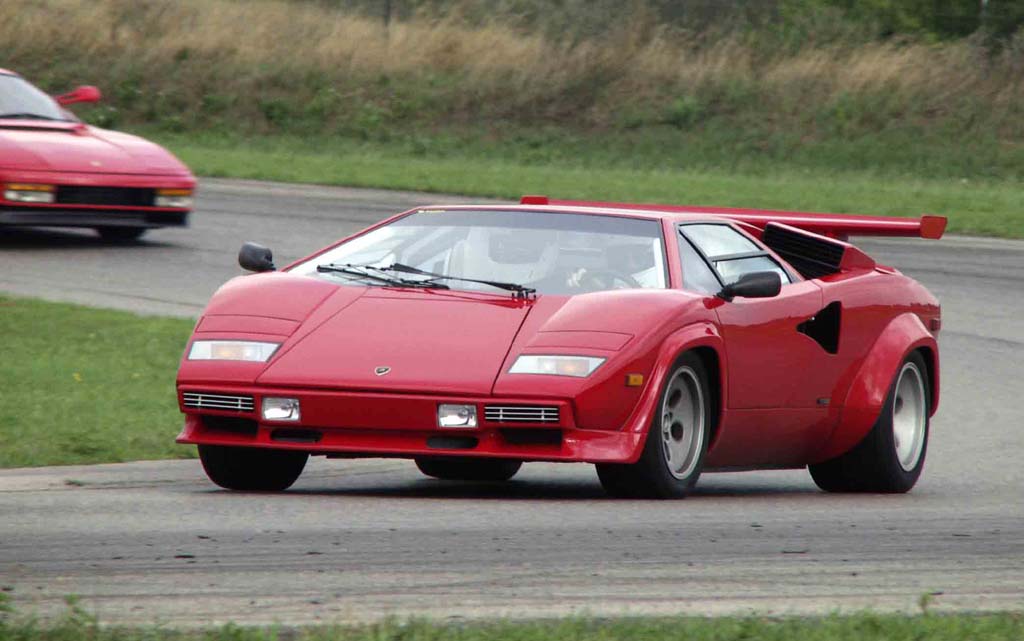
On April 28, 1916, Ferruccio Lamborghini, the founder of the company that bears his name and is known for stylish, high-performance cars, is born in Italy.
After World War II, Lamborghini founded a business making tractors from reconfigured surplus military machines, near Bologna, Italy. He later expanded into other ventures, including manufacturing air-conditioning and heating systems, and grew rich. Lamborghini’s success enabled him to purchase a variety of luxury sports cars, including a Ferrari, considered one of the top cars of the time. After experiencing mechanical difficulties with his Ferrari, Lamborghini decided to start his own rival sports car company, even hiring a former top Ferrari engineer. Automobili Lamborghini was officially established in 1963 in Sant’Agata Bolognese, Italy, and the same year debuted its first car, the Lamborghini 350 GTV, a two-seater coupe with a V12 engine.
The company’s logo featured a bull, a reference to Ferruccio Lamborghini’s zodiac sign, Taurus the bull. Various Lamborghini models had names related to bulls or bullfighting, including the Miura (named for Don Eduardo Miura, a breeder of fighting bulls), a mid-engine sports car that was released in mid-1960s and gained Lamborghini an international following among car enthusiasts and a reputation for prestige and cutting-edge design.
In the early 1970s, Lamborghini’s tractor business experienced problems and he eventually sold his interest in his sports car business and retired to his vineyard. Automobili Lamborghini changed hands several times and in the late 1990s was purchased by German automaker Volkswagen. The company continued to build high-performance cars, including the Murcielago (capable of going over 200 mph) and the Gallardo. Ferruccio Lamborghini died on February 20, 1993, at the age of 76.
This is an example post, originally published as part of Blogging University. Enroll in one of our ten programs, and start your blog right.
You’re going to publish a post today. Don’t worry about how your blog looks. Don’t worry if you haven’t given it a name yet, or you’re feeling overwhelmed. Just click the “New Post” button, and tell us why you’re here.
Why do this?
The post can be short or long, a personal intro to your life or a bloggy mission statement, a manifesto for the future or a simple outline of your the types of things you hope to publish.
To help you get started, here are a few questions:
You’re not locked into any of this; one of the wonderful things about blogs is how they constantly evolve as we learn, grow, and interact with one another — but it’s good to know where and why you started, and articulating your goals may just give you a few other post ideas.
Can’t think how to get started? Just write the first thing that pops into your head. Anne Lamott, author of a book on writing we love, says that you need to give yourself permission to write a “crappy first draft”. Anne makes a great point — just start writing, and worry about editing it later.
When you’re ready to publish, give your post three to five tags that describe your blog’s focus — writing, photography, fiction, parenting, food, cars, movies, sports, whatever. These tags will help others who care about your topics find you in the Reader. Make sure one of the tags is “zerotohero,” so other new bloggers can find you, too.

 Carstoria