The 1930s
In 1929, Enzo Ferrari left Alfa Romeo’s employment to start his own racing stable (scuderia in Italian). Scuderia Ferrari did not race cars with the Ferrari name, though the Alfas they used on the track did sport the prancing horse. Race cars came to the scuderia from Alfa for tuning for almost a decade, and the Ferrari shop in Modena built its first car, the Alfa Romeo 158 Grand Prix racer, in 1937.
The 1940s
When Enzo Ferrari left Alfa Romeo, he agreed to not use his name in connection with racing for four years. That wasn’t so bad; WWII curtailed racing for most of those four years anyway. Ferrari moved from Modena to Maranello during the war, where it remains today.
The 1950s
During the 1950s, Ferrari had legendary engineers like Lampredi and Jano on the payroll, and bodies designed by the legendary Pinin Farina. Every time a race car was improved, the road car was the beneficiary. In 1951, a Ferrari 375 brought the team its first victory — over Alfa Romeo, no less.
The 1960s
The ’60s started out pretty good for Ferrari: Phil Hill won the Formula 1 championship in 1961 using a 1.5-liter V6 race car nicknamed “Dino.” It was the era of the sexy, swooping 250 Testa Rossa.
The 1970s
The V6 engine made it to a production model in the Dino 246 of the early ’70s. In 1972, the company built the Fiorano test circuit next to the factory. Ferrari introduced the Berlinetta Boxer flat-12 engine to the world at the 1971 Turin Motor Show in the 365 GT/4 Berlinetta Boxer, and the car hit showrooms in 1976.
The 1980s
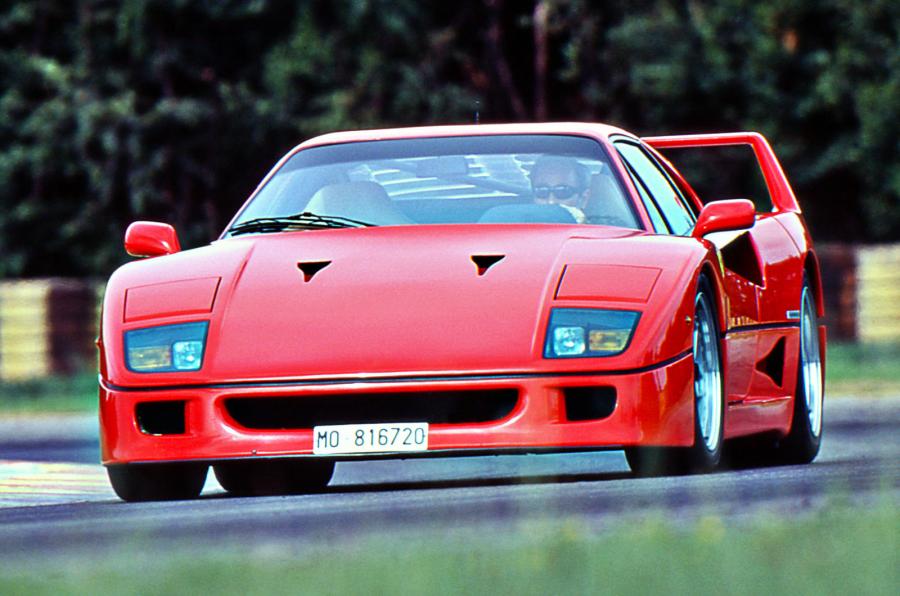
Let’s skip to 1985 when one of the most iconic of all Ferraris appeared on posters across the world: the Testarossa (note that this time, the model name is one word, not two). The ’80s also saw the convertible Mondial and the realization of Enzo Ferrari’s dream, the F40.
The 1990s to Current
In 1991, Luca di Montezemolo took the reins of the Prancing Horse. The supercar streak continued with the F50, but the ’90s had a wider offering of smaller engines, like the V8 in the F355 series. There were still V12s to be had, of course, like the Testarossa that continued to be built through the mid-90s. In 2003, Enzo Ferrari got his due, with a 230-mph supercar named after the company’s founder.
 Carstoria